Publications
Peer-reviewed work
2026
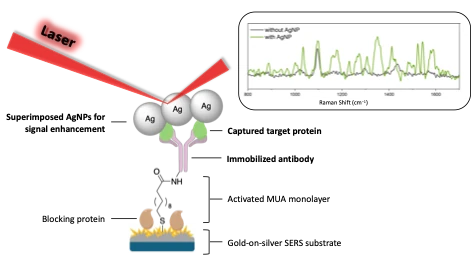
H. Bhattacharjee, S. Azimi, M. Wilson, A. Docoslis, “An Antibody-Functionalized SERS-Based Sensor for Specific Detection of Biological Analytes,” Sensors and Actuators Reports (2026), 100495, doi: 10.1016/j.snr.2026.100495.
SERSbiosensingantibody
2025
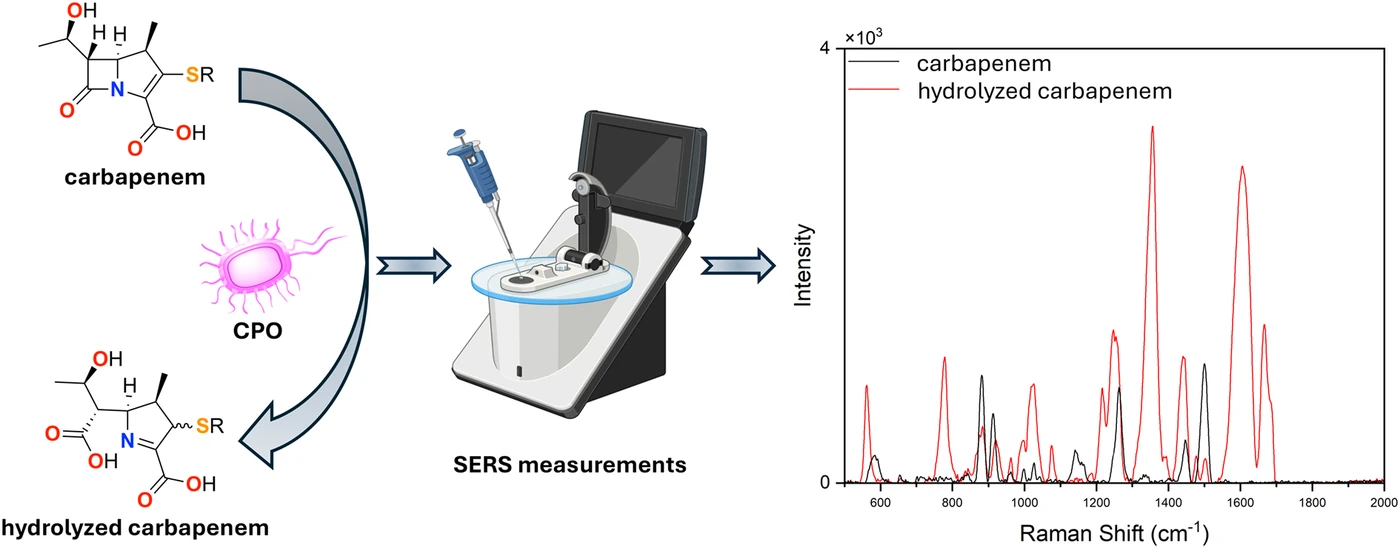
Z. Wang, H. Bhattacharjee, M. Jeffs, R. Gray, Y. Bdour, A. Docoslis, C. Lohans, C. Escobedo, “Detection of Carbapenemase-Mediated Antimicrobial Resistance Using Surface-Enhanced Raman Scattering,” Analyst (2025), 150, 4925–4929, doi: 10.1039/d5an00839e.
SERSbiosensingantimicrobial resistance
2024
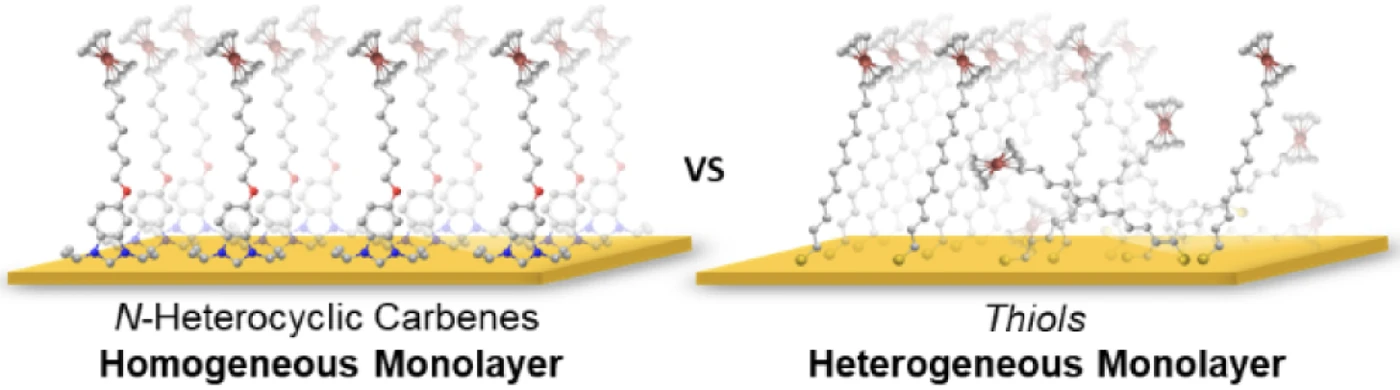
L. Qi, R. M. Mayall, D. S. Lee, C. Smith, A. Woods, M. R. Narouz, A. Hyla, H. Bhattacharjee, Z. She, C. M. Crudden, V. I. Birss, “Energetics and Redox Kinetics of Pure Ferrocene-Terminated N-Heterocyclic Carbene Self-Assembled Monolayers on Gold,” Langmuir (2024), 40, 17367–17377, doi: 10.1021/acs.langmuir.4c01446.
ferroceneself-assembled monolayerselectrochemistry- Inside Front Cover
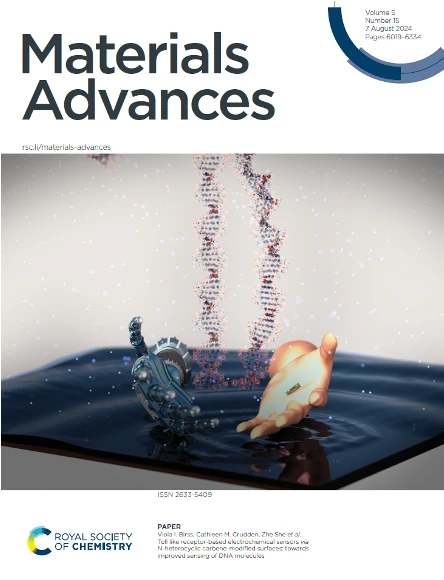
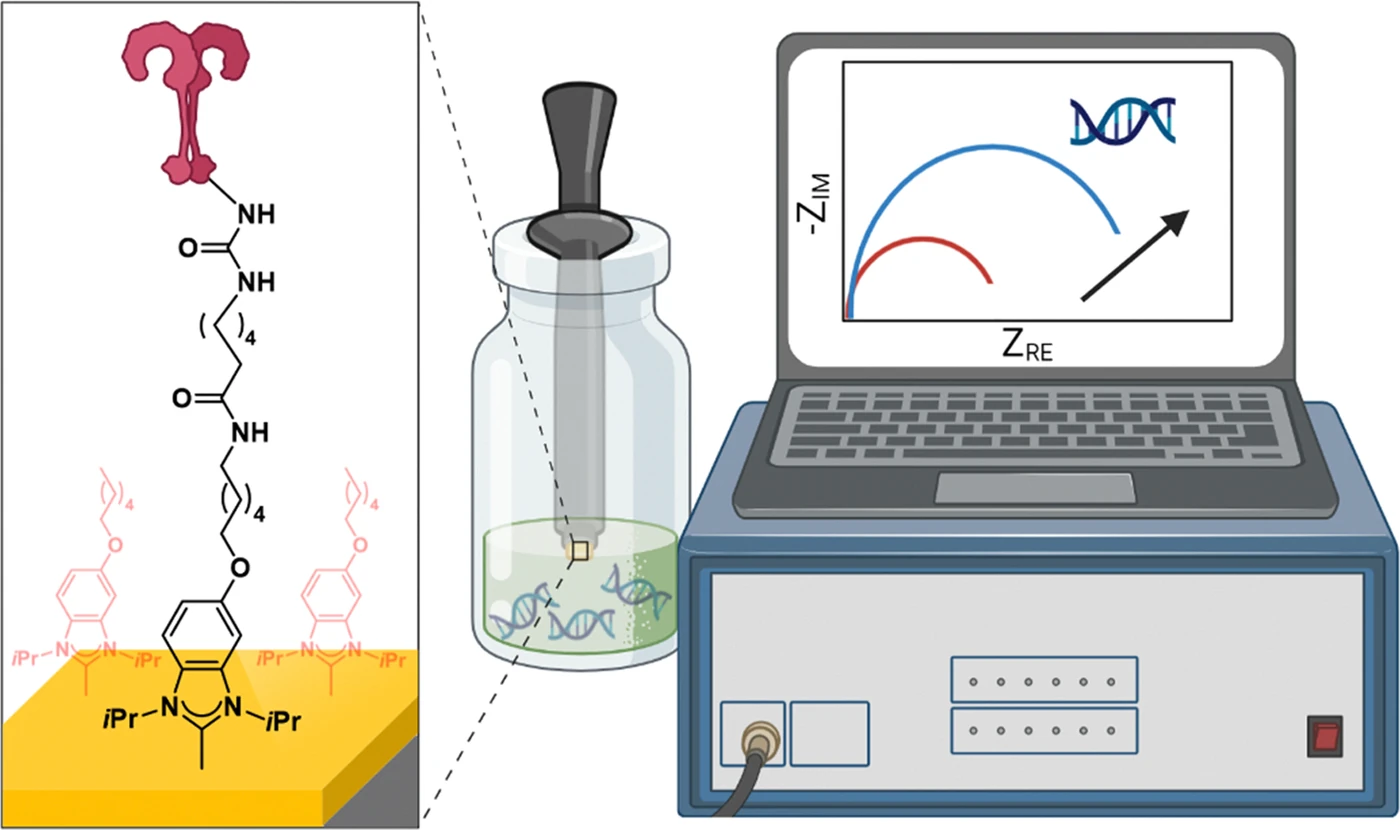
D. S. Lee, M. P. Zarabadi, H. Bhattacharjee, L. Qi, J. F. McLeod, K. Saeedfar, I. Singh, A. Woods, A. Messina, V. I. Birss, C. M. Crudden, Z. She, “Toll-Like Receptor-Based Electrochemical Sensors via N-Heterocyclic Carbene-Modified Surfaces: Towards Improved Sensing of DNA Molecules,” Materials Advances (2024), 5, 6063–6069, doi: 10.1039/d4ma00188e.
electrochemistryN-heterocyclic carbenesbiosensing
2021
- Front Cover
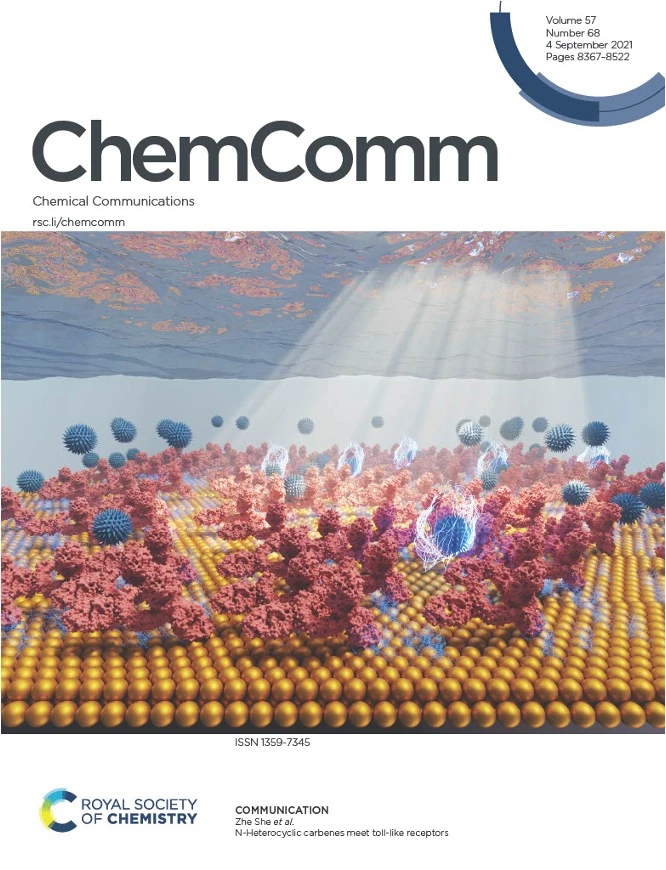
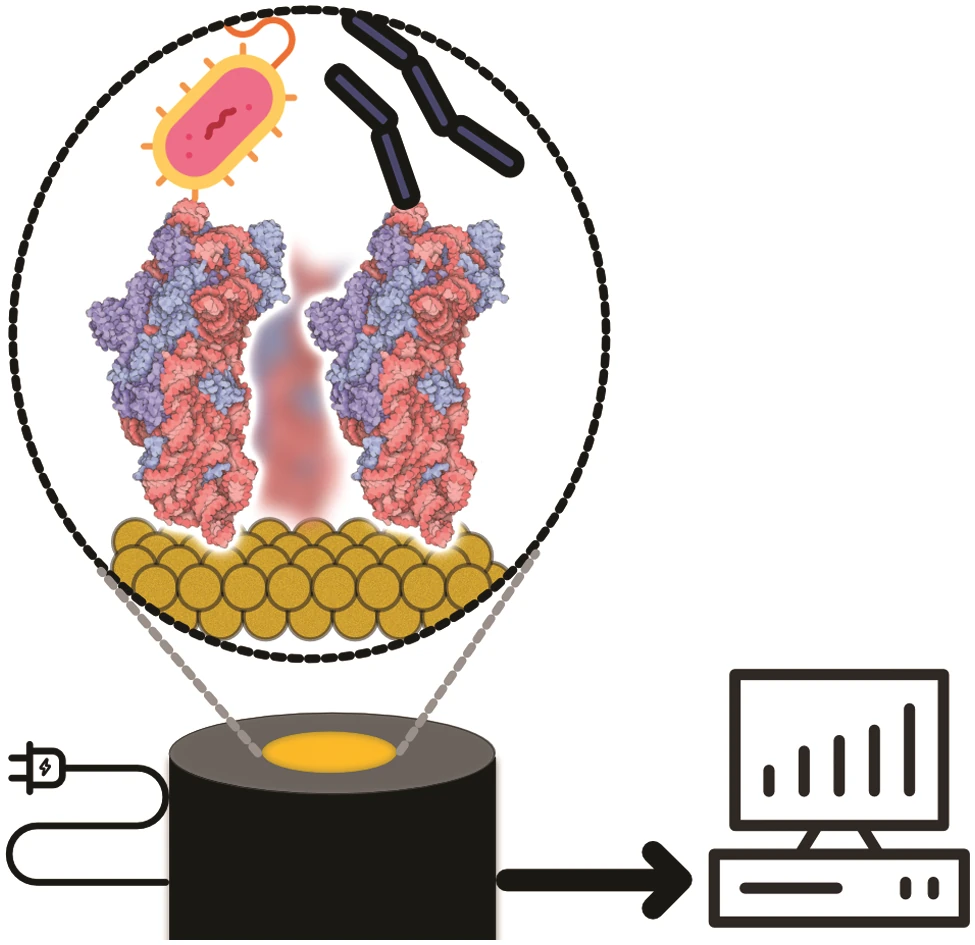
I. Singh, D. S. Lee, S. Huang, H. Bhattacharjee, W. Xu, J. F. McLeod, C. M. Crudden, Z. She, “N-Heterocyclic Carbenes Meet Toll-Like Receptors,” Chemical Communications (2021), 57, 8421–8424, doi: 10.1039/d1cc03030b.
N-heterocyclic carbenesbiosensingelectrochemistry
2019
- Frontispiece
![Journal cover art: Unique Bora[1]ferrocenophanes with Sterically Protected Boron: A Potential Gateway to Helical Polyferrocenes](/publications/2019-boraferrocenophanes-cover.webp "Selected as the Frontispiece, Angew. Chem. Int. Ed. 2019, 58, 16575")
![Graphical abstract: Unique Bora[1]ferrocenophanes with Sterically Protected Boron: A Potential Gateway to Helical Polyferrocenes](/publications/2019-boraferrocenophanes.webp)
H. Bhattacharjee, J. Zhu, J. Müller, “Unique Bora[1]ferrocenophanes with Sterically Protected Boron: A Potential Gateway to Helical Polyferrocenes,” Angewandte Chemie International Edition (2019), 58, 16575–16582, doi: 10.1002/anie.201908993.
ferrocenophanesorganometallicboron
2018
![Graphical abstract: Strained Azabora[2]ferrocenophanes](/publications/2018-azaboraferrocenophanes.webp)
H. Bhattacharjee, S. Dey, J. Zhu, W. Sun, J. Müller, “Strained Azabora[2]ferrocenophanes,” Chemical Communications (2018), 54, 5562–5565, doi: 10.1039/c8cc02965b.
ferrocenophanesorganometallicboron
2017
![Graphical abstract: How Strained are [1]Ferrocenophanes?](/publications/2017-how-strained-ferrocenophanes.webp)
E. Khozeimeh Sarbisheh, H. Bhattacharjee, M. P. T. Cao, J. Zhu, J. Müller, “How Strained are [1]Ferrocenophanes?,” Organometallics (2017), 36, 614–621, doi: 10.1021/acs.organomet.6b00808.
ferrocenophanesorganometallic
2016
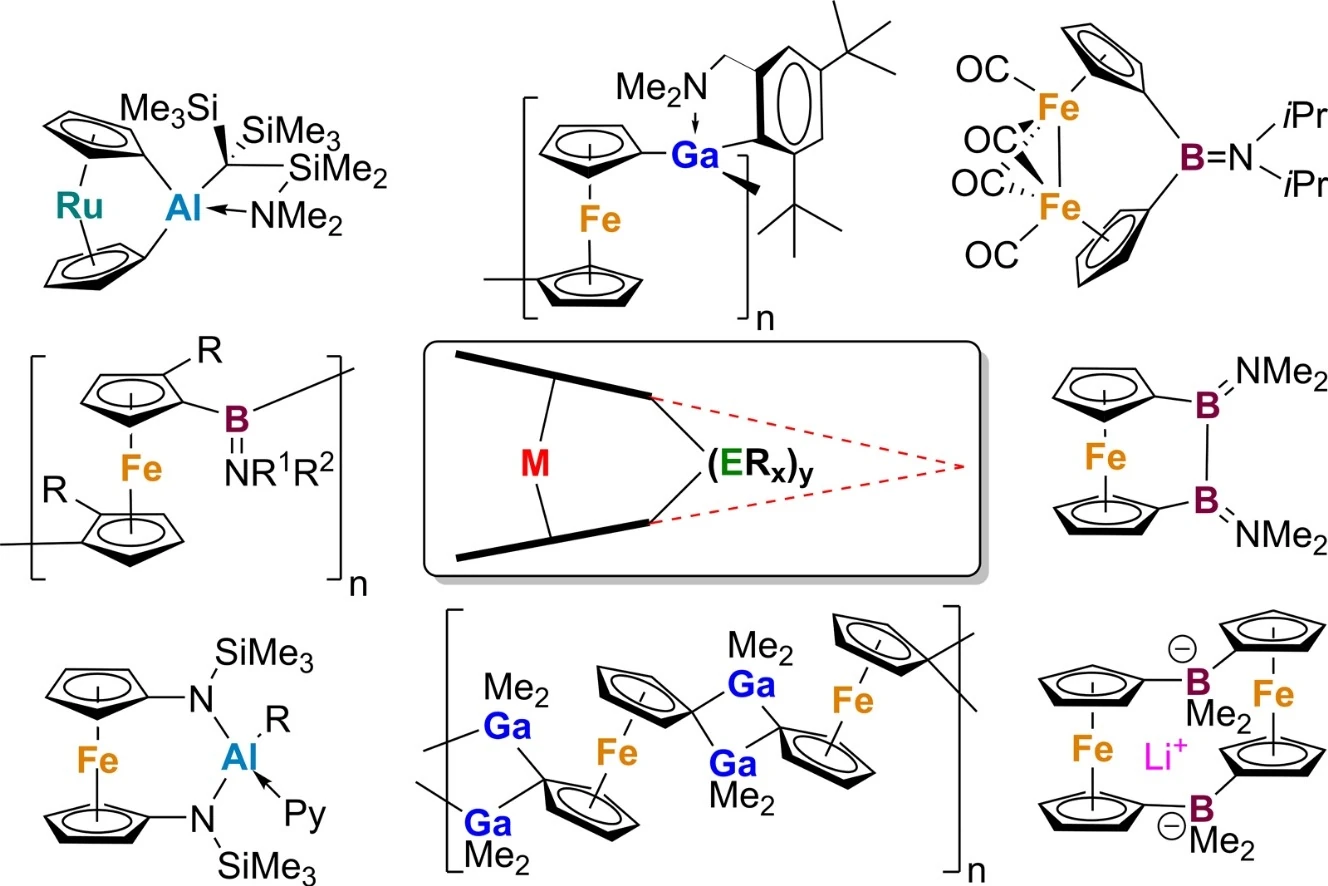
H. Bhattacharjee, J. Müller, “Metallocenophanes Bridged by Group 13 Elements,” Coordination Chemistry Reviews (2016), 314, 114–133, doi: 10.1016/j.ccr.2015.09.008.
reviewmetallocenophanesorganometallic![Graphical abstract: Insight into the Formation of Highly Strained [1]Ferrocenophanes with Boron in Bridging Position](/publications/2016-strained-ferrocenophanes.webp)
H. Bhattacharjee, J. D. Martell, E. Khozeimeh Sarbisheh, S. Sadeh, J. W. Quail, J. Müller, “Insight into the Formation of Highly Strained [1]Ferrocenophanes with Boron in Bridging Position,” Organometallics (2016), 35, 2156–2164, doi: 10.1021/acs.organomet.6b00388.
ferrocenophanesorganometallicboron
2014
![Graphical abstract: Chiral Bora[1]ferrocenophanes: Syntheses, Mechanistic Insights, and Ring-Opening Polymerizations](/publications/2014-chiral-boraferrocenophanes.webp)
S. Sadeh, H. Bhattacharjee, E. Khozeimeh Sarbisheh, J. W. Quail, J. Müller, “Chiral Bora[1]ferrocenophanes: Syntheses, Mechanistic Insights, and Ring-Opening Polymerizations,” Chemistry – A European Journal (2014), 20, 16320–16330, doi: 10.1002/chem.201404222.
ferrocenophanesring-opening polymerizationorganometallic
2012
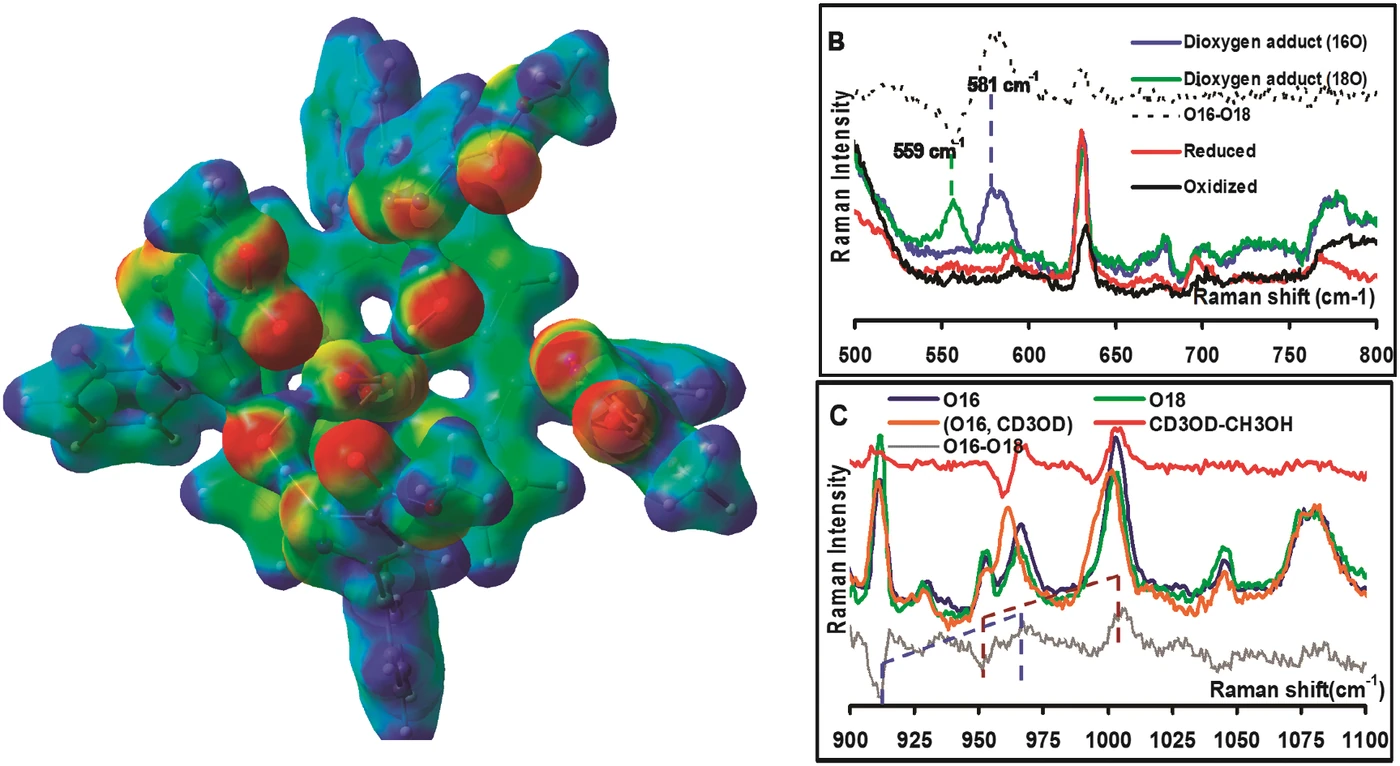
K. Mittra, S. Chatterjee, S. Samanta, K. Sengupta, H. Bhattacharjee, A. Dey, “A Hydrogen Bond Scaffold Supported Synthetic Heme Fe(III)–O2− Adduct,” Chemical Communications (2012), 48, 10535–10537, doi: 10.1039/c2cc35162e.
bioinorganic chemistryhemespectroscopy